Zum Hauptinhalt springen

Animal welfare

Animal welfare

Our cows – our stars.

The welfare of our dairy cows is our top priority. Our farmers work to high animal welfare standards that go far beyond legal requirements and are actively put into practice every day.

Through regular training, continuous monitoring and close cooperation within our cooperative, we ensure that animal welfare standards are constantly developed and implemented in a sustainable manner.

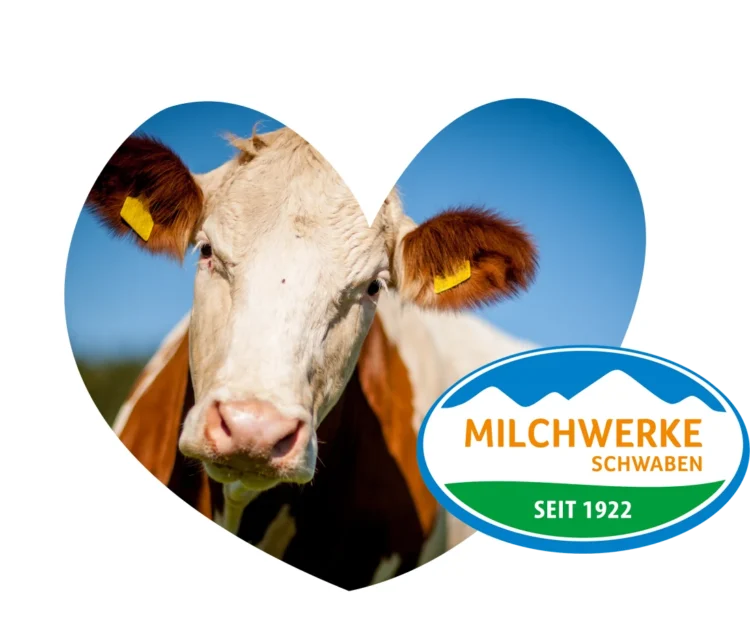
Cow portrait under a blue sky in a heart-shaped frame, next to the Milchwerke Schwaben logo
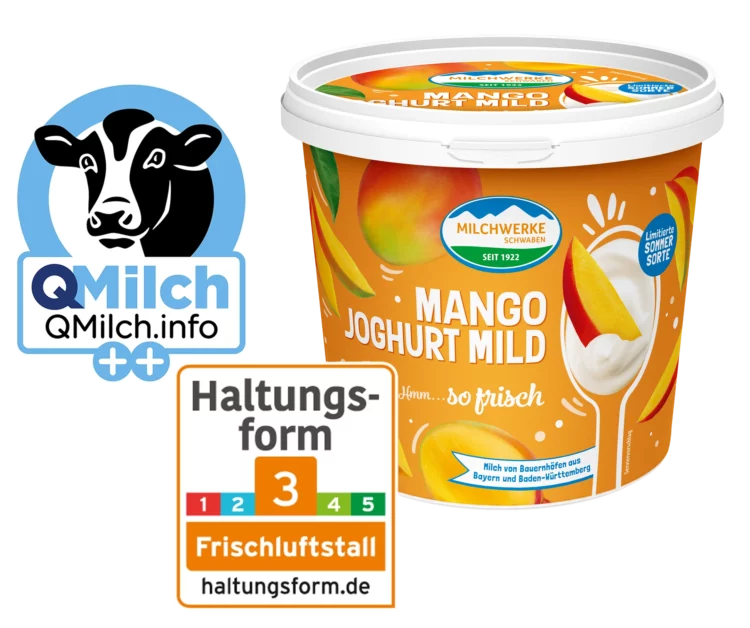
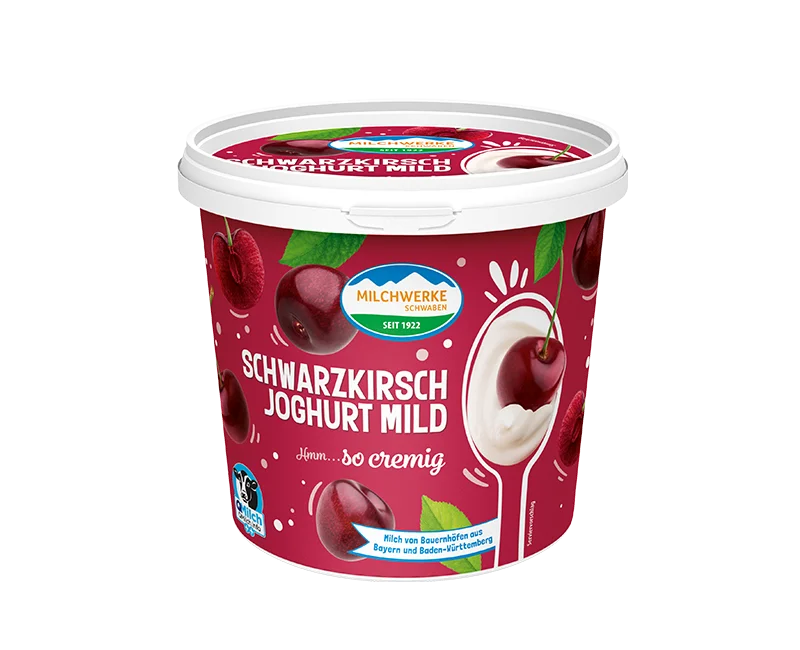
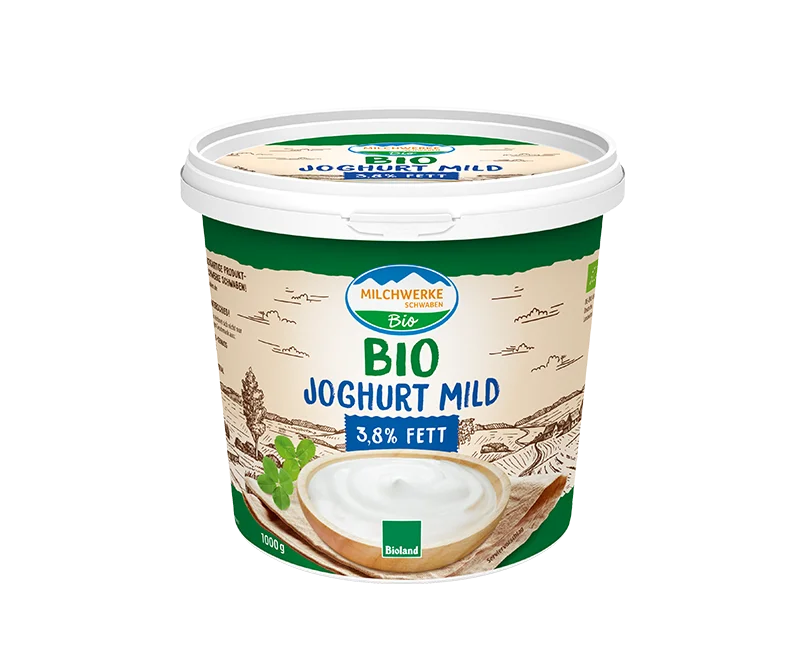
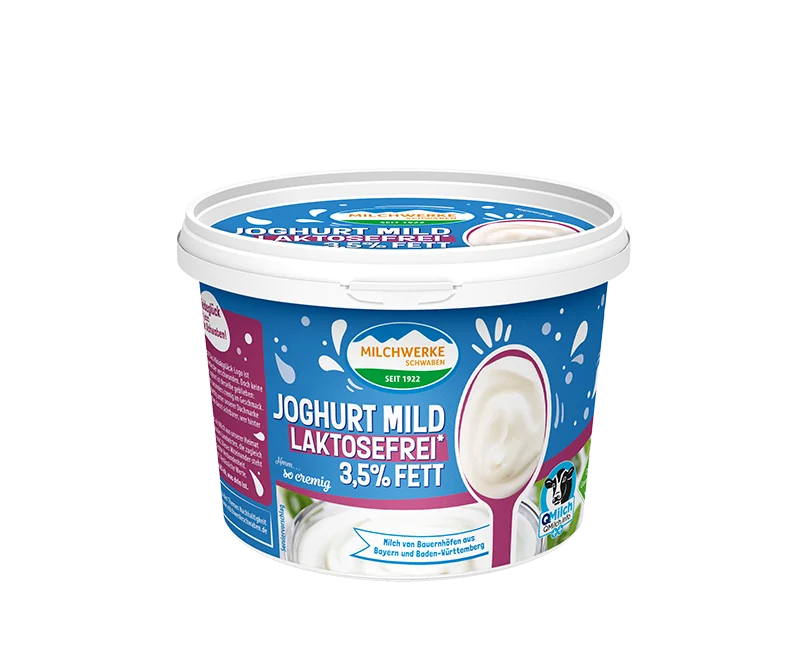
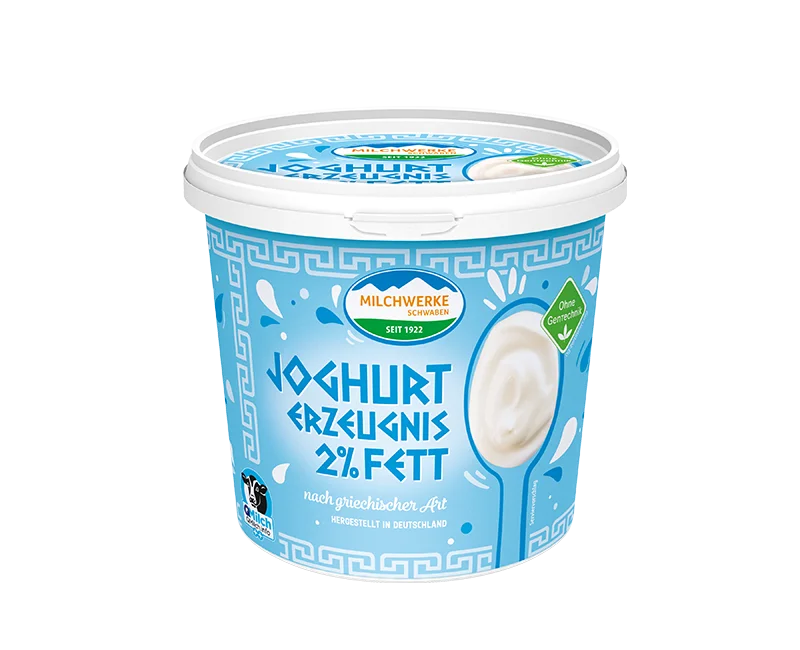
Yogurt pot with animal welfare labels QMilch++ and Haltungsform 3

Housing system 3 & QMilch++

We offer more – and go one better!

At Milchwerke Schwaben, we adhere to Housing Standard 3 for our yoghurt products and Housing Standard 5 for our organic range, in order to improve animal welfare in livestock farming and highlight a significant improvement over Housing Standards 1 and 2. The cows live in a free-range barn or have access to pasture for at least 120 days a year; they are not tethered and have more space than required by law.

Since 2022, the QM++ add-on module has offered dairy farms the opportunity to obtain certification beyond the established QM standard. The module corresponds to Housing Category 3 and ensures that dairy cows are kept in outdoor conditions. We at Milchwerke Schwaben are committed to having all our farmers certified to QM++. This certification demonstrates our commitment to species-appropriate care, a healthy diet and the comprehensive welfare of our cows.

The animals receive intensive veterinary care, sufficient space and access to fresh air. Enrichment materials such as rubbing and scratching brushes are available to every animal. For you, this means high-quality dairy products from happy and healthy cows.

Including these products:

Organic

Quality you can trust – from pasture to yoghurt.

Our organic milk comes from our regional, Bioland-certified farmers. Like our conventional farmers, the organic farmers are also co-owners of our dairy. They run their farms in accordance with the current Bioland guidelines. The focus is on animal welfare, sustainable farming, feed that is completely non-GMO, and no use of synthetic chemical pesticides or fertilisers.

Found in these products, among others:

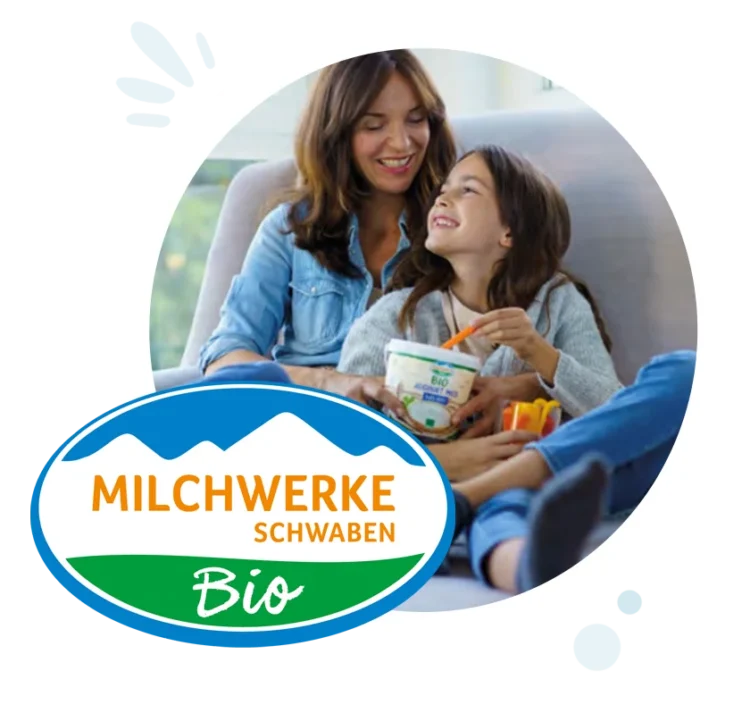
A mother eating yoghurt from a pot with a child, next to the Milchwerke Schwaben Bio logo

Non GMO

EU Organic certified

Bioland certified

Free from artificial flavours

Free from flavour enhancers

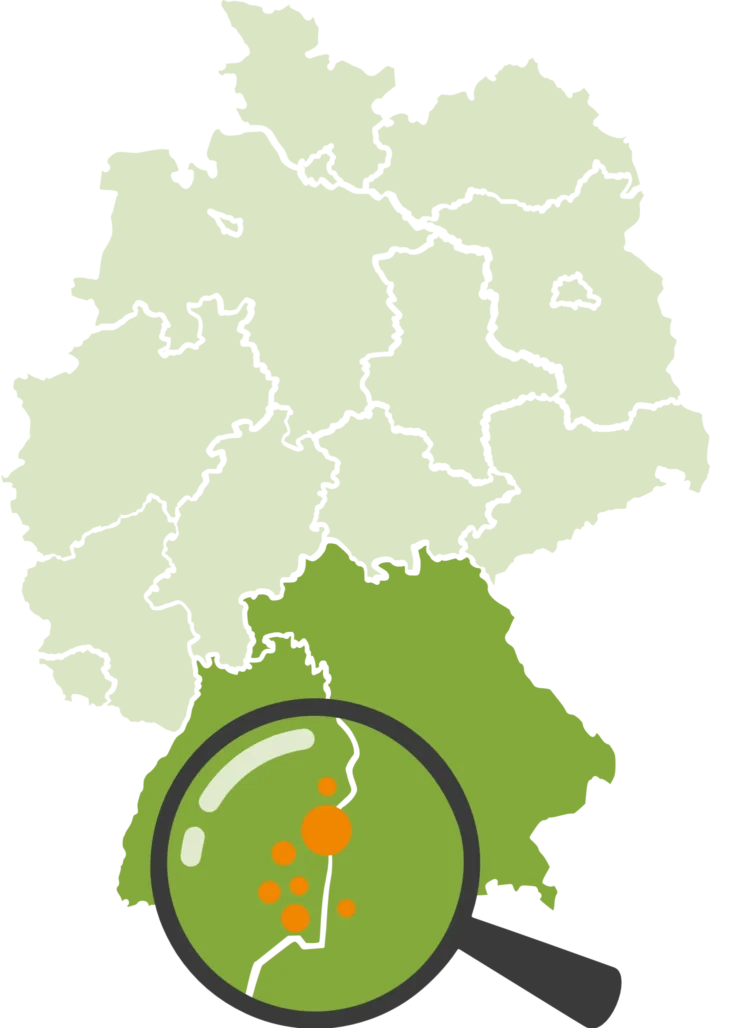
Map of Germany with a magnifying glass over the border region between Bavaria and Baden-Württemberg – this is where the farms of our pasture milk producers are located.

Pasture milk

Our Pasture Milk – natural, delicious, regional.

All the pasture milk comes from regional farms within our cooperative. The farms are located in the Biberach district, the Alb-Donau district and Neu-Ulm. Our cows graze on pastures between the rivers Danube, Iller and Alp. Thanks to the agricultural diversity in this area, our cows have a varied diet, which forms the basis for nutrient-rich pasture milk.

The milk is collected directly from the farm by a collection lorry and stored in separate tanks.

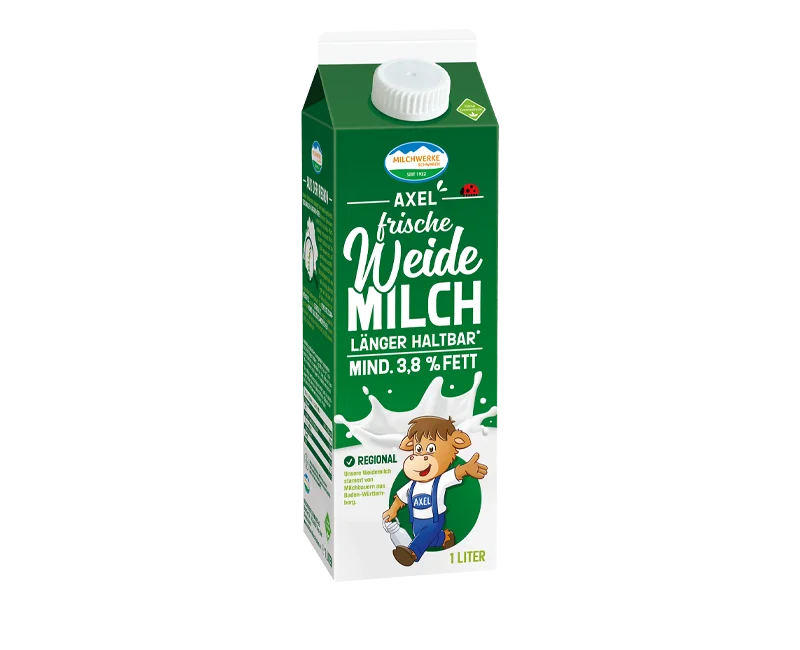
For our 1-litre whole milk, the collected pasture milk is currently transported to a partner dairy, which assists us with bottling. This enables us to meet our customers’ wishes and offer fresh pasture milk in a practical, resealable pack.

Found in these products, among others:

Our pasture milk farmers use only non-GMO feed.

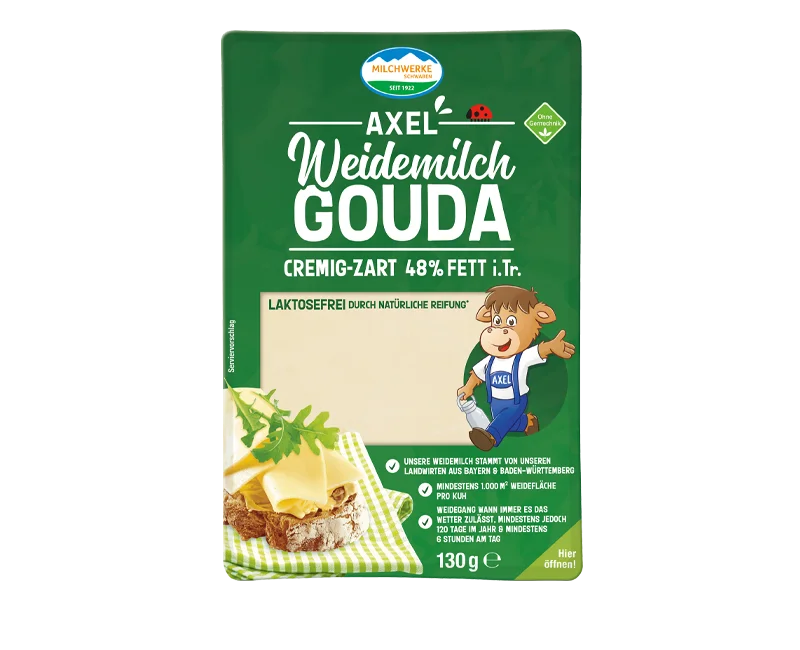
Our pasture milk cows graze for at least 120 days a year.

During the grazing season, our animals are on pasture for at least 6 hours a day from spring to the end of October, weather permitting.

The cows are provided with spacious grazing areas of at least 1,000 m² per cow.

Without genetic engineering

Nature provides the best genes.

That is why we use 100% non-GMO milk in selected product ranges. Our farmers consciously avoid genetically modified feed and work to strict, natural guidelines. Because we are convinced that true quality comes from working in harmony with nature. Through controlled feeding, species-appropriate husbandry and the strength of our region, we guarantee dairy products that are not only delicious, but also pure and transparent. Discover our non-GMO products – for everyone who values natural enjoyment.

Including these products:

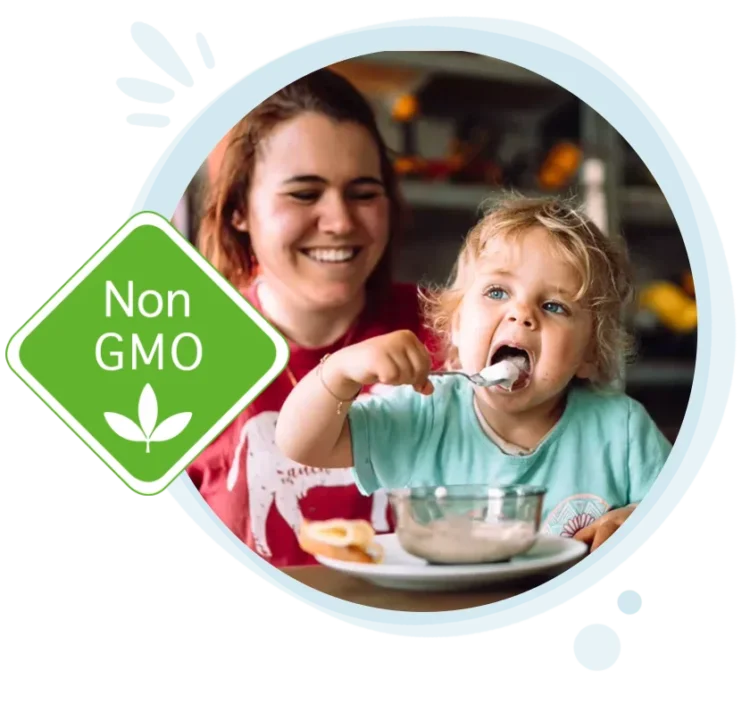
Girl eating yoghurt, next to the 'Non GMO' logo

Frequently Asked Questions

Housing system 1 – Barn

  1. Accommodation: The cows are kept in a loose housing system with cubicles (ratio of animals to cubicles 1:1).
  2. Housing: Indoor housing; preferably free-stall housing or mixed housing.

Housing system 2 – Barn + outdoor access

  1. Enclosure: The animals are kept in a loose housing system with cubicles (ratio of animals to cubicles 1:1) or in a loose housing system without cubicles, whereby a minimum area per animal must be guaranteed.
  2. Housing: Free-stall housing or combined housing with access to pasture, alternatively an exercise yard or exercise pen.

Housing system 3 – Fresh air housing

  1. Space: The animals are kept in a loose housing system with cubicles (animal-to-cubicle ratio 1:1) or in a loose housing system without cubicles, whereby a larger minimum area per animal must be guaranteed.
  2. Housing: Free-stall housing with a continuously accessible exercise yard or with access to pasture, alternatively open-front free-stall housing. Tethering is prohibited.

Housing system 4 – Outdoor access + pasture

  1. Space: The cows have access to a loose housing system with cubicles (1:1) or to a loose housing system without cubicles, in which case an even larger minimum area per animal is required.
  2. Housing: Free-stall housing with a continuously accessible exercise yard and access to pasture. Tethered housing is prohibited. The participating farms ensure that their dairy cows have access to pasture.

Housing system 5 – Organic

  1. Space: The cows have access to a loose housing system with cubicles (1:1) or to a loose housing system without cubicles, in which case the largest minimum area per animal is required.
  2. Housing: Loose housing and access to pasture (outdoor access) whenever possible. Tethering is prohibited and permitted only seasonally in specific cases.

Source: haltungsform.de

The QMilch programme run by QM-Milch e. V. is designed to ensure verifiable quality standards in milk production and strictly monitored animal welfare in the cowshed. Inspections are carried out every three years by independent auditors. The programme comprises various housing categories, each with specific requirements regarding the care and housing of the animals: QM+ (housing system 2), QM++ (housing system 3) and QM+++ (housing system 4).

Source: qm-milch.de

QM+ (Housing system 2)

This level of the QMilch programme corresponds to mixed housing or indoor housing with additional space. Here, the cows have access to cubicles or a free-stall barn with a minimum area per animal. In addition, there is access to pasture or an exercise yard. The exclusive tethering of animals is prohibited. Intensive veterinary care and opportunities for the animals to rub themselves must be provided.

QM++ (Housing system 3)

In this additional module, the animals are kept under outdoor climate conditions. The cows have more space in the free-stall barn or on pasture and year-round access to an exercise yard or open-front barn. Tethering is not permitted. Participation in animal health monitoring programmes, such as antibiotic monitoring, and the provision of enrichment materials are mandatory. The animals are fed only non-GMO feed.

QM+++ (Housing system 4)

This level, designed for even higher animal welfare, combines free-range access and grazing. The cows have access to a loose housing system with an even larger minimum area per animal, as well as a year-round exercise yard and grazing access. Tethered housing is prohibited. Comprehensive veterinary care is guaranteed, and dehorning may only be carried out under anaesthesia by a qualified veterinarian. The dairy cows are provided with enrichment materials and are fed exclusively non-GMO feed, predominantly of regional origin.

Source: qm-milch.de/qmilch-info